I was a copywriting consultant at a startup incubator.
The Blackstone LaunchPad is Syracuse University’s entrepreneurship and innovation hub. It serves students, faculty, staff, and alumni who are building startups, creative ventures, or social impact projects.
While I was employed there from 2022 to 2024, I was part of a small team of subject matter experts.
Like me, they were college students hired on the basis of their ability (gained through academic study and life experiences) to mentor fledgling entrepreneurs in a particular specialized niche.
Some of my colleagues were savvy financiers, exceptional at making financial projections and sleuthing out the best capital raising opportunities.
Some could develop complete wireframes for apps and websites out of thin air, seemingly overnight, and with no corporeal fuel but three hours of sleep and a lukewarm Red Bull to keep them flying on caffeinated wings.
Some had even started (and succeeded) at business ventures of their own.
But me? I was just an author masquerading behind a degree study in business analytics.
For a while, I felt like a poser sharing the same office as my peers. Students would enter the LaunchPad seeking mentorship, and I felt woefully underquipped to offer any value in the same way they could.
It was quite a self-defeating experience at times…
Candidly, there were moments when I struggled to grasp why I was hired at the LaunchPad in the first place. Why me? Why not someone more equipped? More qualified?
That was until I caught wind of something going on at our pitch competitions: a secret advantage that was enabling newcomers to upset the long-standing veterans and secure prize money without having so much as a business plan or minimum viable product, and by pitching (arguably) weaker ideas.
Except this advantage hadn’t been a secret to me.
Rather, it was a skill I’d come to know intimately over years and years of obsessively analyzing my favorite books, movies, and speeches to enhance my own storytelling skills and elicit powerful emotions from my modestly-sized audiences.
I simply didn’t know this skill by its proper name in the context of business: copywriting.
As soon as I’d realized my age-old obsession for storytelling had a pointed purpose, my feelings of inadequacy dissipated. In an office of savants and entrepreuerial heavy-hitters, I’d found my own latent specialty after all. I could be helpful to others too.
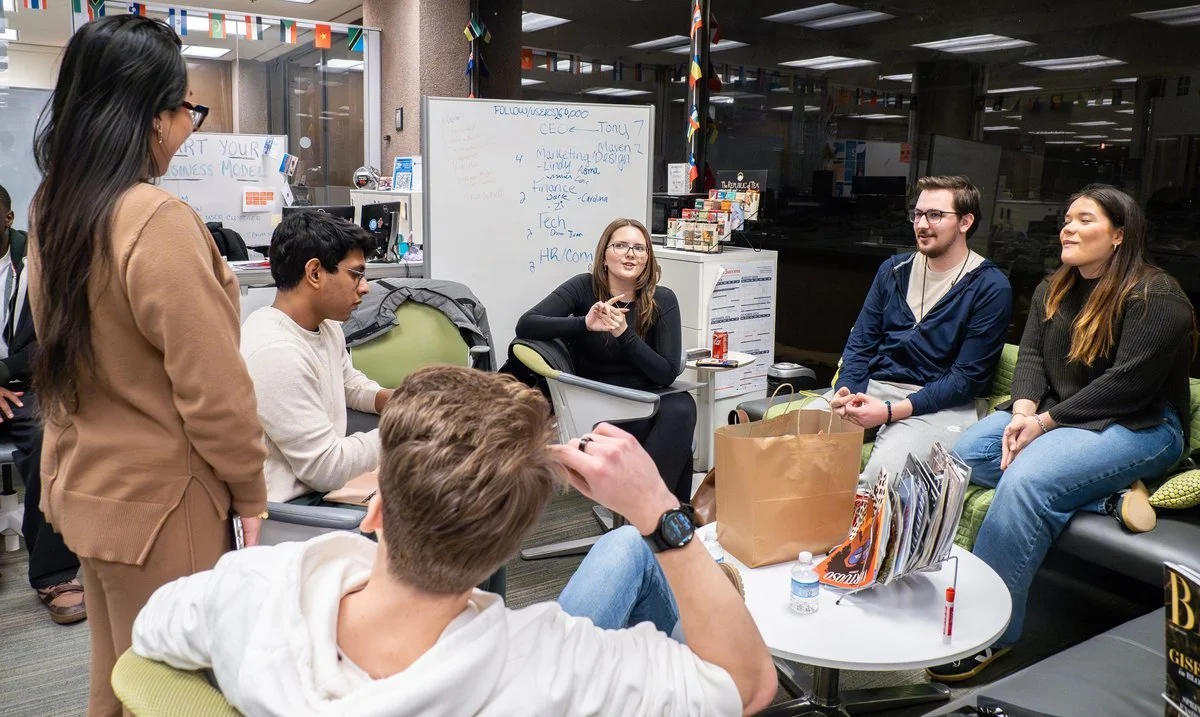
Students meeting at the Blackstone LaunchPad.
If I were to describe that secret advantage in less abstract terms, here’s how I would put it.
Some entrepreneurs at our pitch competitions (think Shark Tank but on a collegiate level) came prepared with an intriguing and viable idea, a strategically-sound business plan, and even some impressive sales traction to boot.
But when it was time to share the core value proposition of their business in front of a panel of judges, one of two things would commonly happen.
They would either try to affirm their product/service to their audience as if it existed in marketless vacuum where buyer demand was insignificant. “My product does this. My service does that. It’s really cool and progressive and I spent a lot of time working on it—so please invest in me!”
Or, they would have the most brilliant idea and action plan, but then lose their bleary-eyed audience in a deluge of technical jargon and financial figures better reserved for the Q&A section.
Our most successful entrepreneurs, on the other hand, had a different strategy.
Put simply, they told a good story. They framed their product/service around a real, observable pain point. They persuaded the audience of their novel solution to such a compelling and complete degree that the audience no longer wanted to live in a world where this solution didn’t exist—and that’s how they won the vote.
These entrepreneurs understood the unyielding importance of emotional relevance when it comes to sales. “I know why this matter to you. Tell me: why should it matter to me?”
In summary, most of my time at the LaunchPad was spent helping entrepreneurs figure out how they wanted to answer that essential question and frame it as the central focus of their messaging; I’m still obsessed with helping people answer that question.
This role became the springboard for my burgeoning interest in copywriting and marketing, later leading to a summer copywriting internship at IPG Health.
While I was at the LaunchPad, I also enjoyed the privilege of writing spotlight articles for several student entrepreneurs and alumni. I wrote two of them in advertorial format to promote the release of new products/services: one medical memoir, and a limited masterclass series for freelance artists.
You can browse those articles below!

Creative business coach Peter DePasquale—a dual BFA in arts education and printmaking from Syracuse University, as well as an MFA in printmaking from The School of the Art Institute of Chicago—will be leading a four week intensive “bootcamp” accelerator to help students and recent alumni learn how to commercialize their creative endeavors. Space is limited and will be open on a competitive basis to those pursuing professional pathways in all aspects of the visual and performing arts, writers, musicians, designers, and aspiring NFT producers, as well as creatives who are fabricators and makers.
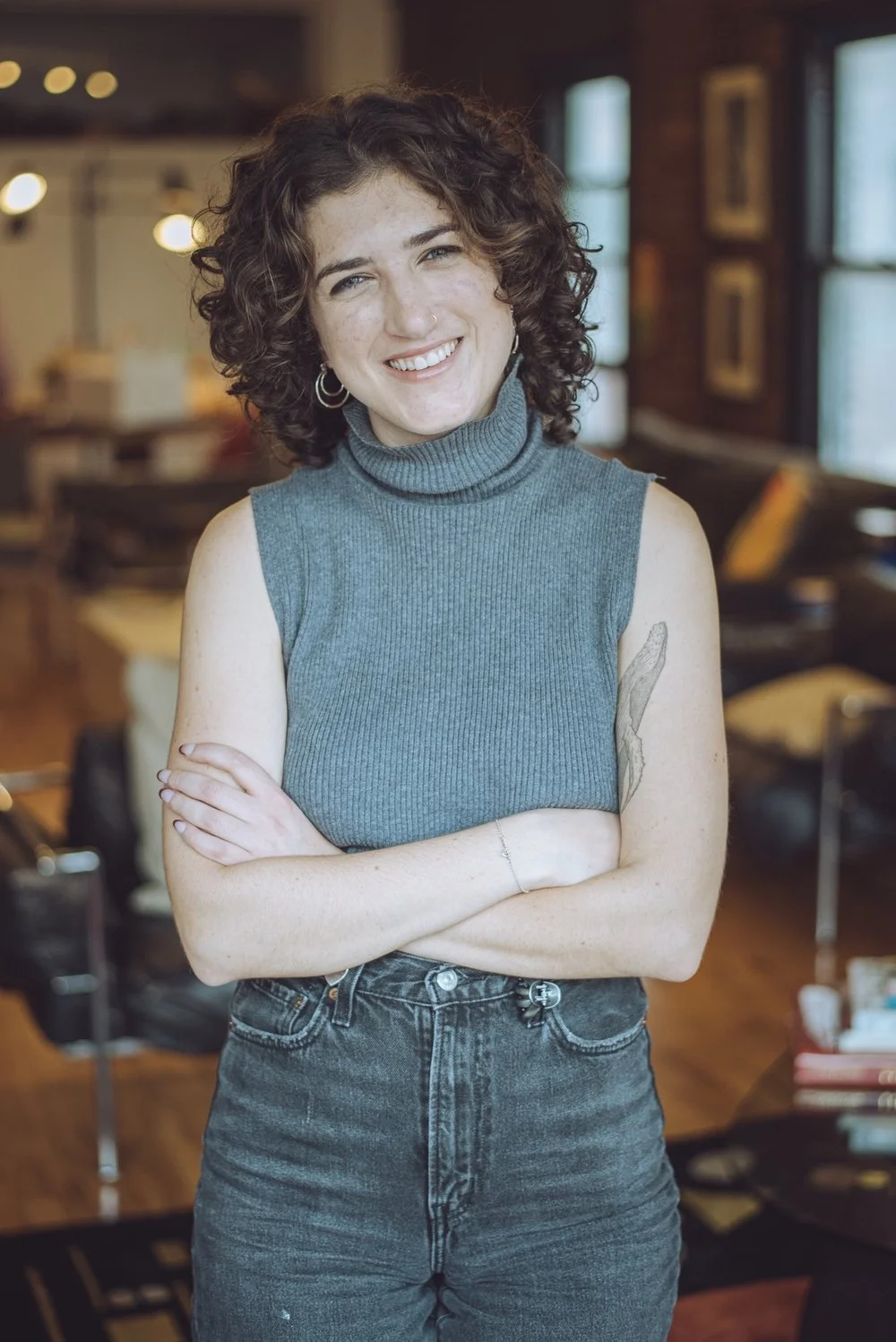
On first impression, it’s unlikely you would assume that Emma Rothman ‘21—a former Blackstone LaunchPad Global Media Fellow and the 2019 Hunter Brooks Watson Scholar at the LaunchPad —received a life-changing heart transplant when she was just twelve years old. From that day on, she was prescribed a new life structure that never felt like her own. Struggling to find balance between being “normal” and chronically ill, and dealing with issues of body image, guilt, anger, and ego, Emma has been on a long journey to recovery that went beyond her physical health. It’s this exact journey which she shares within the pages of her newly released book, “Things My Therapist Told Me Not to Say: Ten Years Post Heart Transplant.”

“Do you want to try some pita?”
Those were among the first words Tyrin said to me when I first met him in the LaunchPad last week. In his hands, he held a Tupperware container with two different varieties sliced into triangle-shaped pieces. One was a bread typical to something you might find at your local grocery store; white, fluffy, and wonderfully baked in Tyrin’s own apartment kitchen. But the other was unlike anything I’d seen before. It had the same fluffiness, texture, and consistency, but it was an interesting shade of greenish-gray and had a slightly nutty flavor. Both were delicious.
The catch? One of those pita breads was baked using dried cricket powder.

“This is bold, raw, and a little bit audacious…but I kind of love it.” That isn’t a thought I ever imagined that looking over a PowerPoint pitch deck could possibly invoke in my mind. Yet, that was my exact reaction when I first found out about Moody Magazine, the lovingly-curated, playfully risqué brainchild of founders Jennie Bull ‘24 and Emma Lueders ‘24.
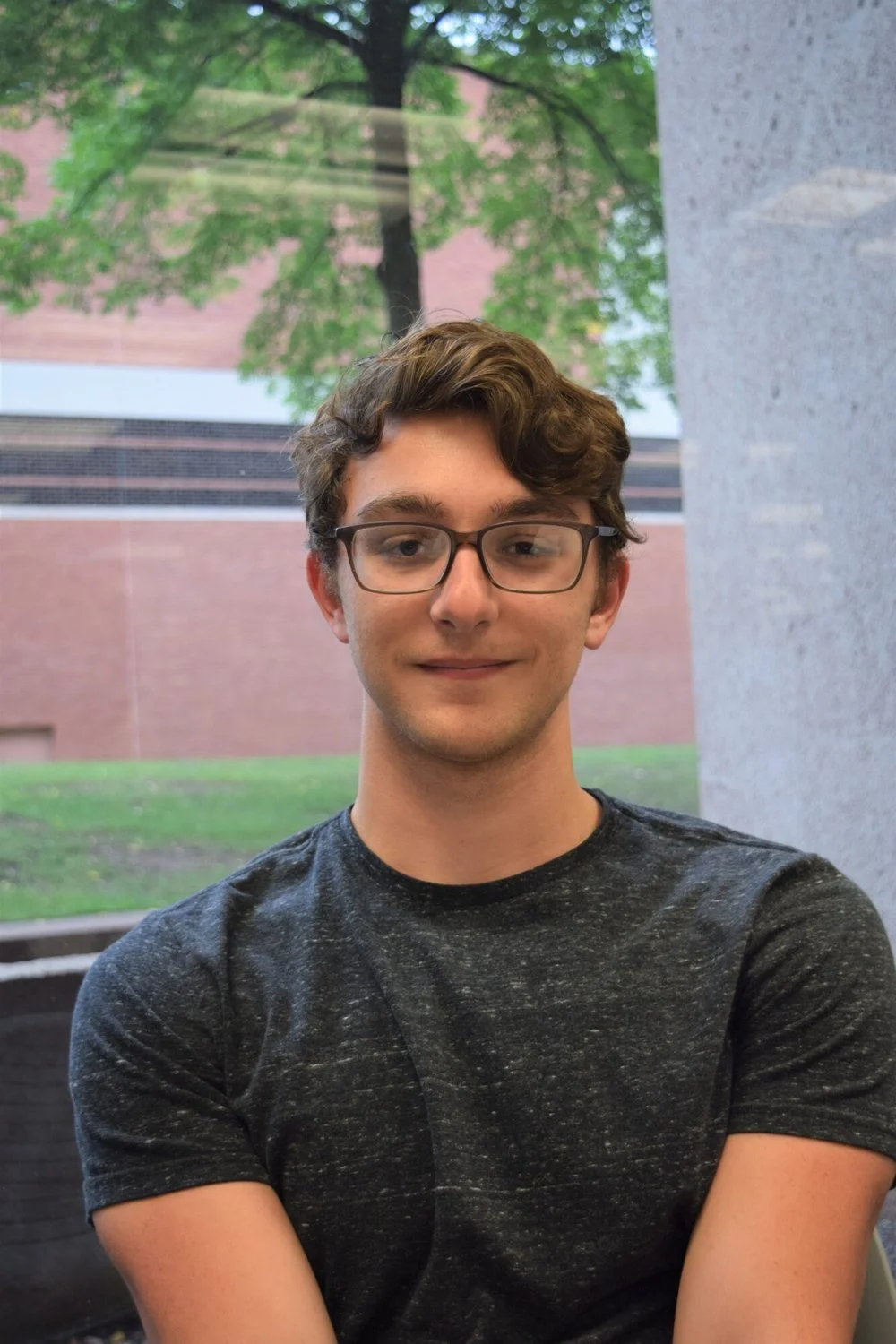
“I have always been drawn to creative problems, yet I have always solved those problems in technical ways. I am very left-brained. But people need to know being left-brained can be just as creative as being right-brained. In fact, if you are forced to pick the perspective of just one side, you lose the overlap between them. That is where all the good things happen.” This was a personal philosophy explained to me by Domenic Gallo 24, a sophomore in the industrial design program at Syracuse University’s College of Visual and Performing Arts.
This semester, Domenic has enjoyed the opportunity of putting his creative problem-solving skills to the test in an inclusive design class offered through the Intelligence ++ program. The elective—available to both undergraduates and graduates—challenges students to ideate and build solutions for challenges unique to individuals with intellectual disabilities.