In the summer of 2023, I interned as a copywriter at IPG Health.
I interned remotely at the FCB Cure office in Parsippany, New Jersey. There, I was mentee to Paul Fischer, a group copy supervisor with a deadpan sense of humor and a lot to share about the world of advertising.
While I was interviewing for the position, Paul asked me, “Do you know anything about pharma copywriting?”
Candidly, I didn’t.
I had a basic handle on copywriting fundamentals, but little understanding of writing for Ozempic (“Oh-oh-oh, Ozempic!”) television spots. You know, those ads where a sprightly middle-aged man is busting a move at the local discotheque while a disembodied narrator reads the most alarming lines over top?
“Side effects may include nausea, headaches, explosive diarrhea, implosive diarrhea, loss of motor function, loss of limbs, loss of your entire Party of Five DVD collection…”
But it didn’t matter. I would soon learn the finer details of the trade.
At the time, Paul’s team was working on Fasenra: an injectable drug for treating moderate-to-severe eosinophilic asthma. I shadowed Paul as he wrote for an upcoming campaign.
He taught me the difference between patient-facing messaging and messaging meant for healthcare professionals. The former cares more about benefits and quality-of-life claims, while the latter focuses on drug efficacy and clinical case studies.
“Sometimes you’re on a wild goose chase trying to make claims the brand wants you to make,” Paul told me. “Sometimes you have to go digging for this research, but sometimes someone will just dump a cache of clinical papers on you and expect you to make due.”
In either case, it’s useful to have a “Bible” of claims to denote which source backs which claim.
While I had some minor contributions on the Fasenra account (mostly A/B testing on email subject lines) the lion’s share of my time was spent working on the Bold Beginners pitch competition.
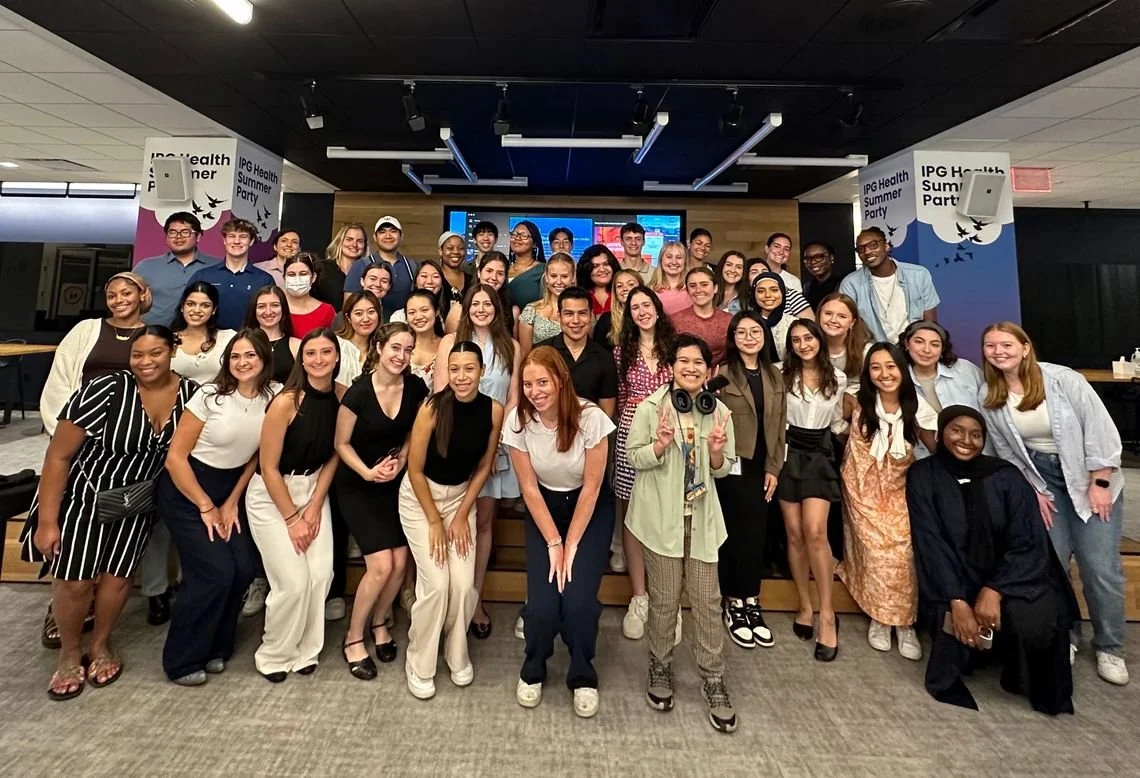
The 2023 IPG Health Bold Beginners intern cohort—minus the remote workers.
The roughly one-hundred interns employed at IPG Health for the summer were split into nine separate teams. Each team had it’s own account managers, strategists, copywriters, and art directors. Our own mini agencies, essentially.
My team—and two other teams—were tasked with creating a two-million-dollar DTC social media campaign for our client and their unnamed pharmaceutical, which we lovingly called Product X: a drug for treating patients of NASH, or nonalcoholic steatohepatitis.
NASH is a form of late-stage liver scarring (cirrhosis) present in patients without a history of alcohol abuse. It’s commonly linked to other medical conditions like obesity, high cholesterol, and type 2 diabetes. If left untreated, it can progress to cancer or liver failure.
But Product X was clinically tested to reverse moderate to severe liver scarring in patients with NASH.
We had to find a way to convey this benefit creatively to our intended audience.
So, with the client brief in hand, my team got to work.
Starting with research…
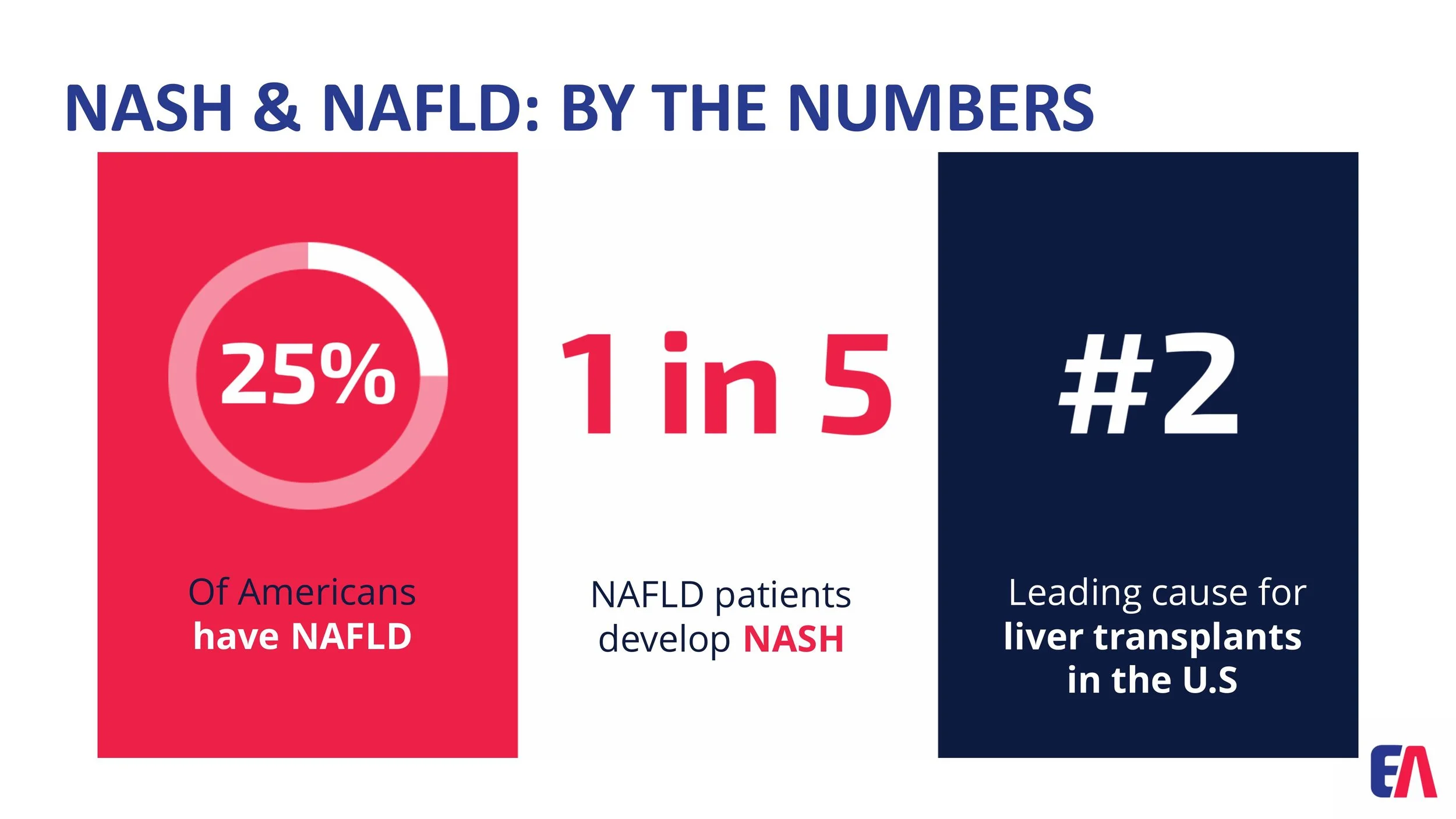
We found that Nonalcoholic Fatty Liver Disease (NAFLD) - the precursor to NASH - was present in a quarter of the U.S. population.

Despite it being the #2 leading cause of liver transplants in this country, it often goes completely undetected - a silent killer!
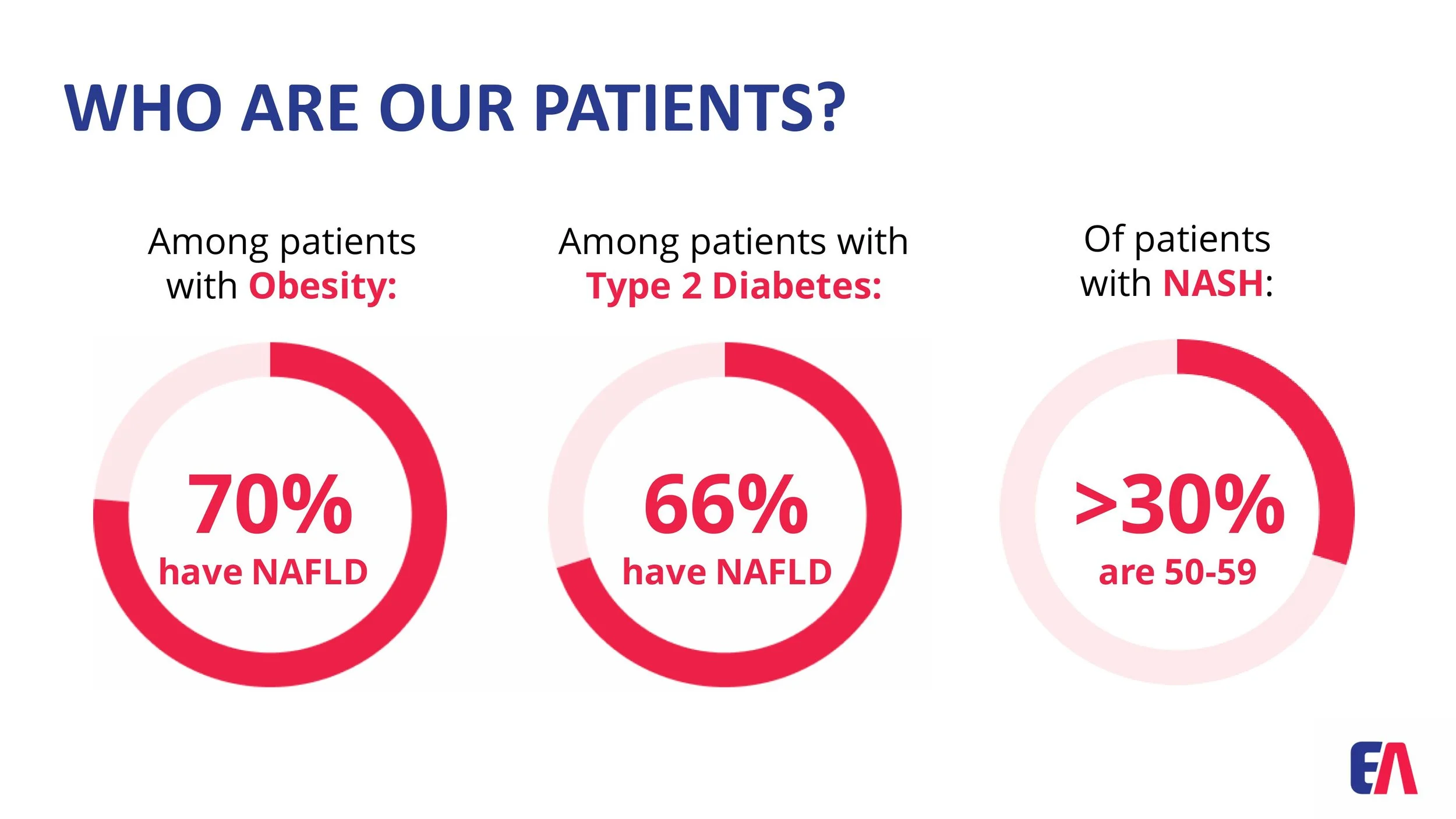
NAFLD is a common comorbidity for obesity and type 2 diabetes.
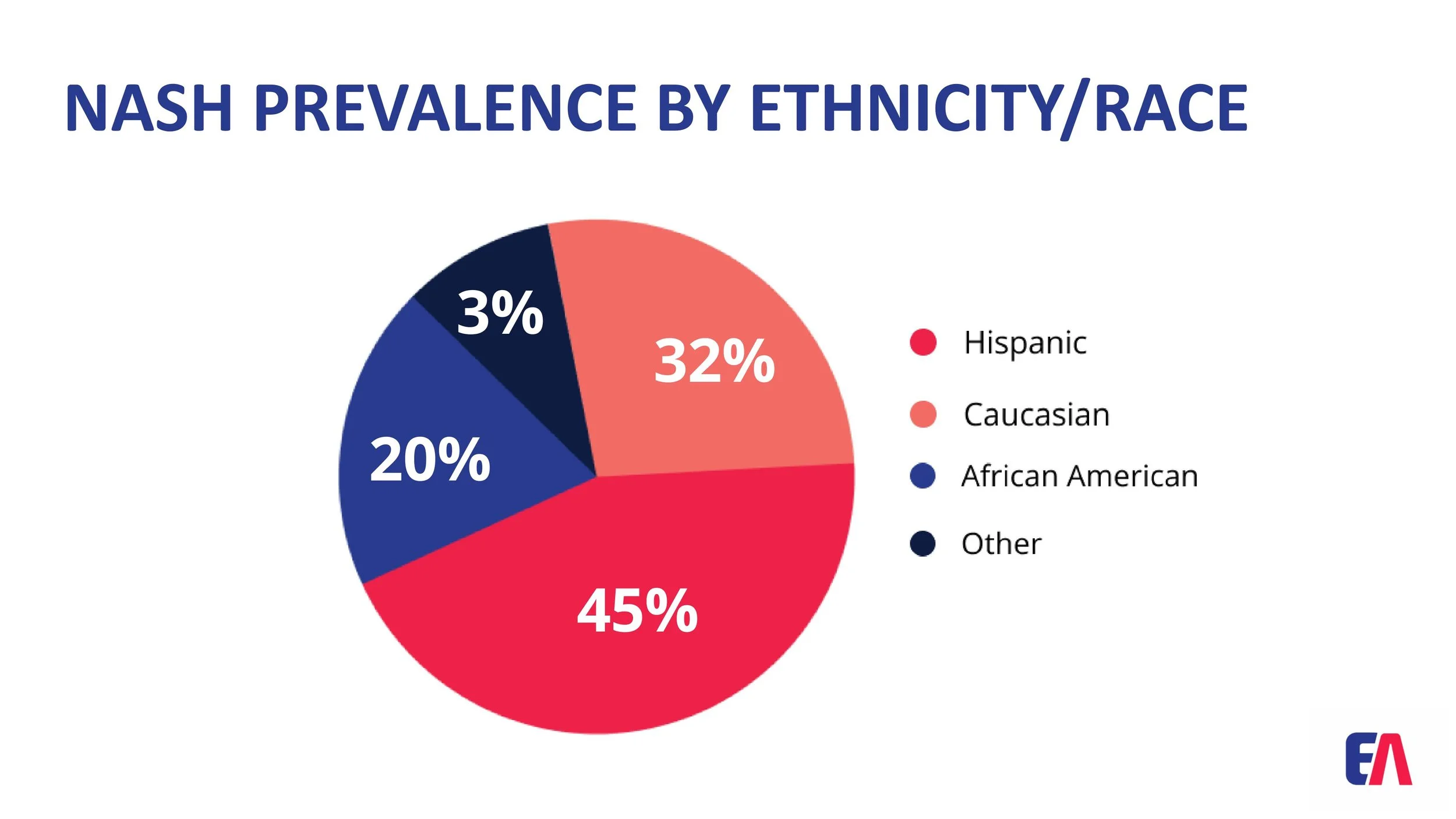
Here is a breakdown of the patient population by ethnicity/race...
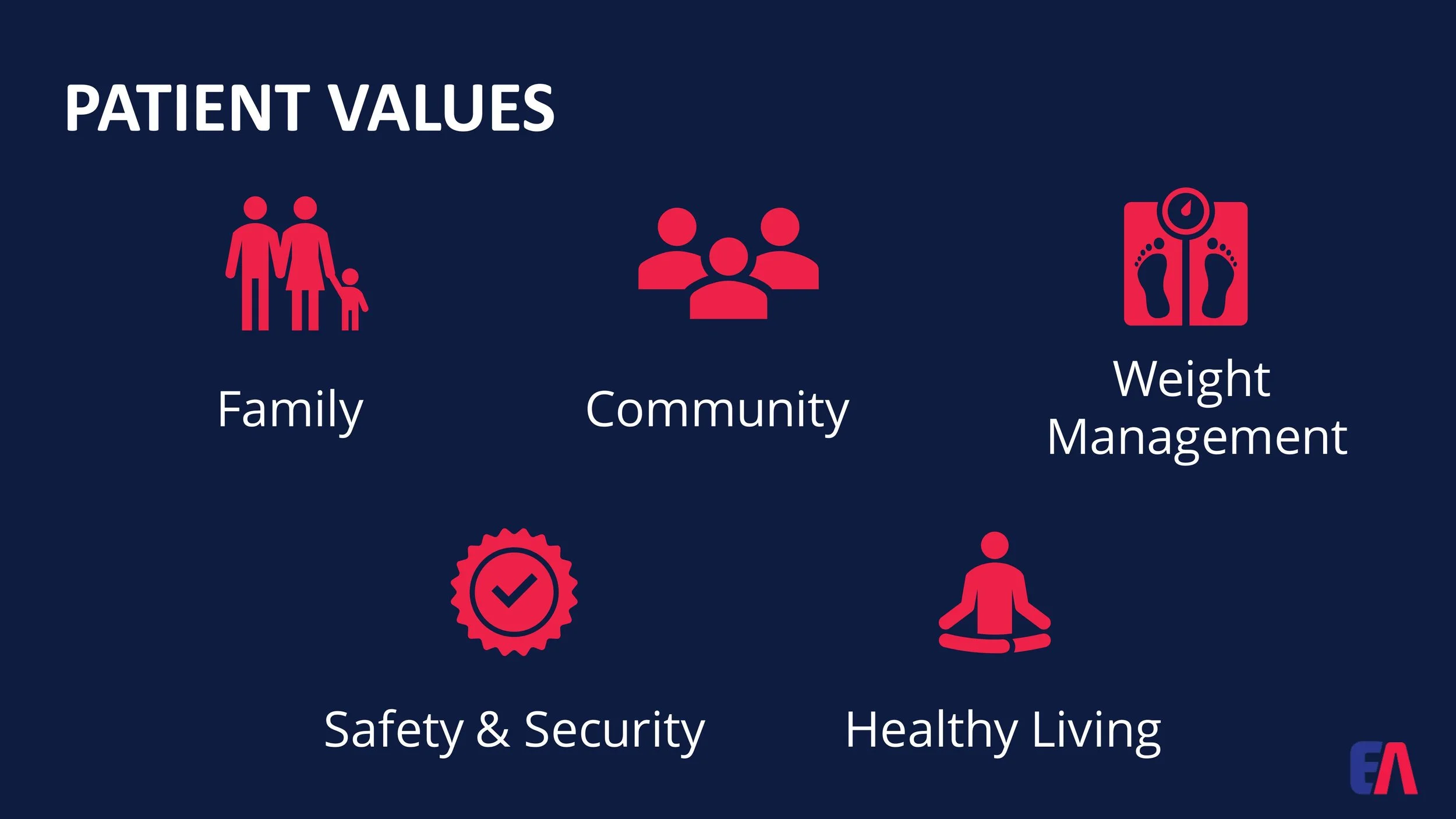
...some of their most cherished values...

...and the social media platforms where they report spending the most time.
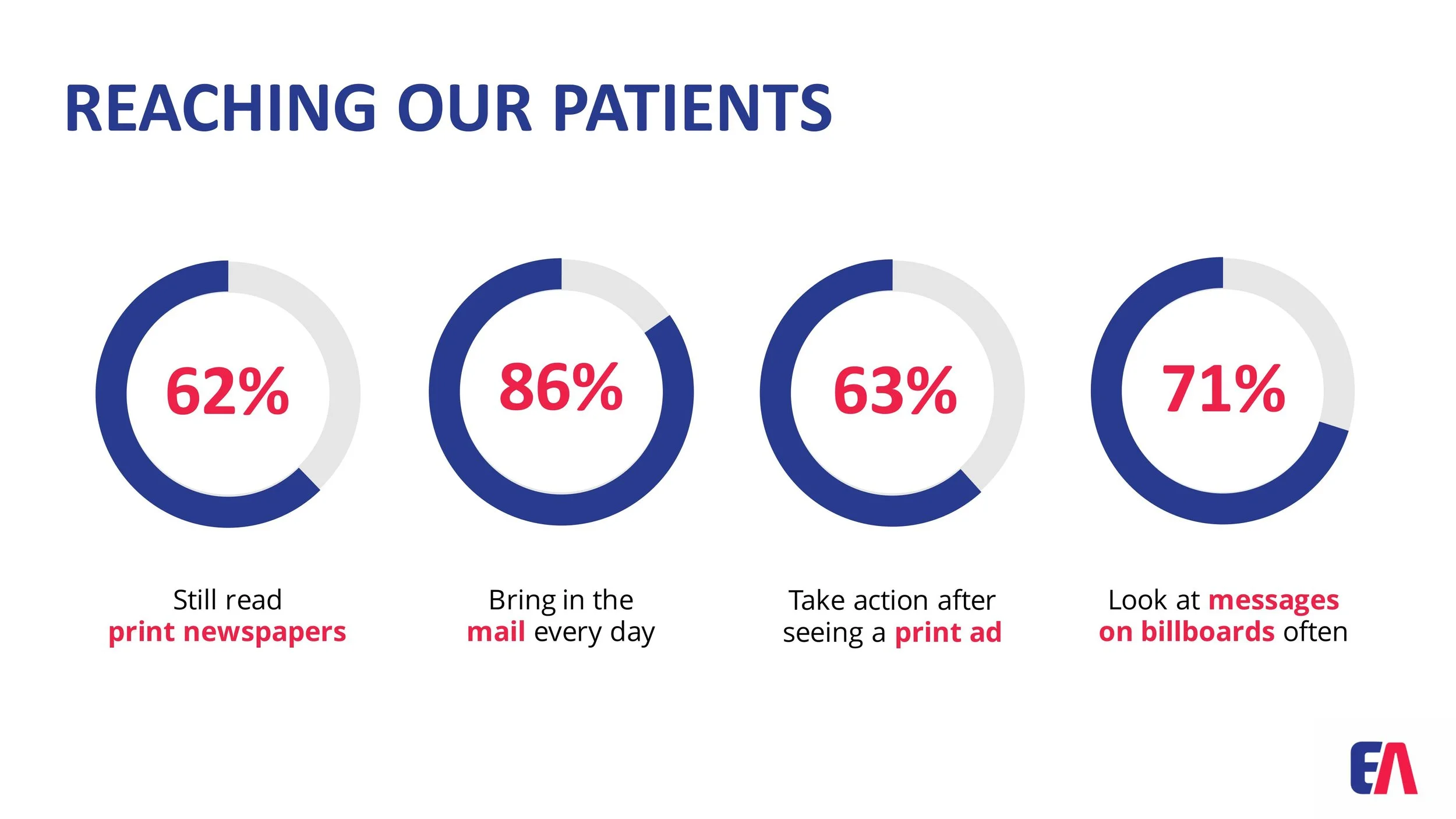
Our target demographic, despite being social media savvy in their own right, still had an interest in print media.
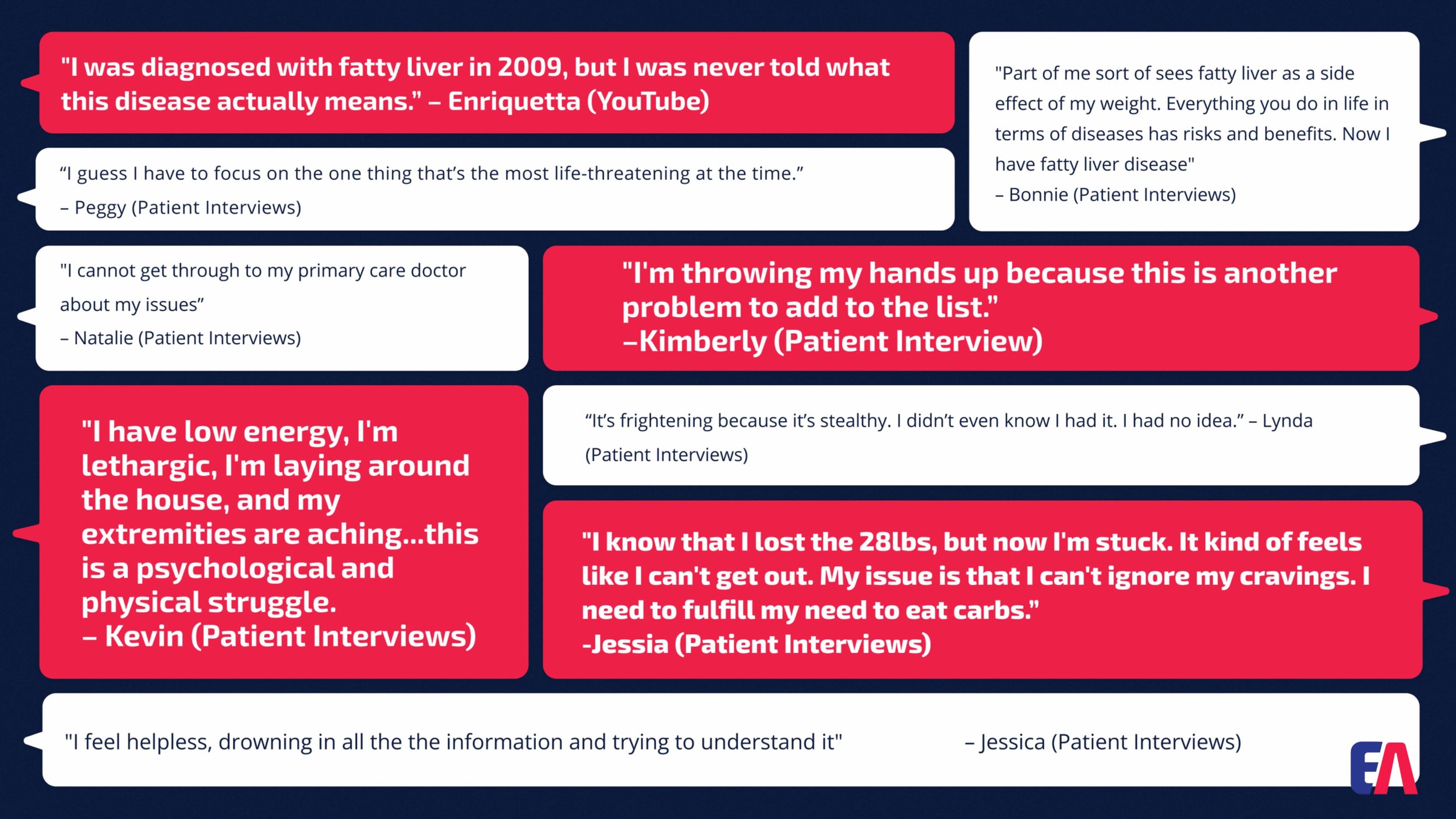
This social listening (or "indirect voice of consumer" research) is where a LOT of our best insights came from. More on that later...
We concluded that NASH patients were physically and mentally overwhelmed by disease they didn’t fully understand, and some of them had so many other priorities in life that they’d rather silently suffer.
At first, we were generating ideas from the creative charge, “Leave your scars behind.”
Many of our earliest ideas incorporated elements of reversal and restoration:
An HGTV partnership where NASH patients would get home renovations, as well as an opportunity to raise awareness of the disease.
A series of emotionally powerful video ads to the tune of Stressed Out by Twenty One Pilots, using time reversal to showcase how small accumulated “scars” lead to the progression of NASH—and how Product X can begin to reverse those scars.
Because NAFLD/NASH is heavily linked with obesity and type 2 diabetes, there was a even a point when Mia (our other copywriter) and I were cackling at the idea of doing a subversive campaign where we held popular junk food mascots accountable for their negligent crimes.
NAFLD/NASH—more than anything else—has to do with the “sugar, salt, fat” endemic in the United States and the eating habits of Americans. The problem has deep, tangled roots that (realistically) couldn’t be resolved by a single drug.
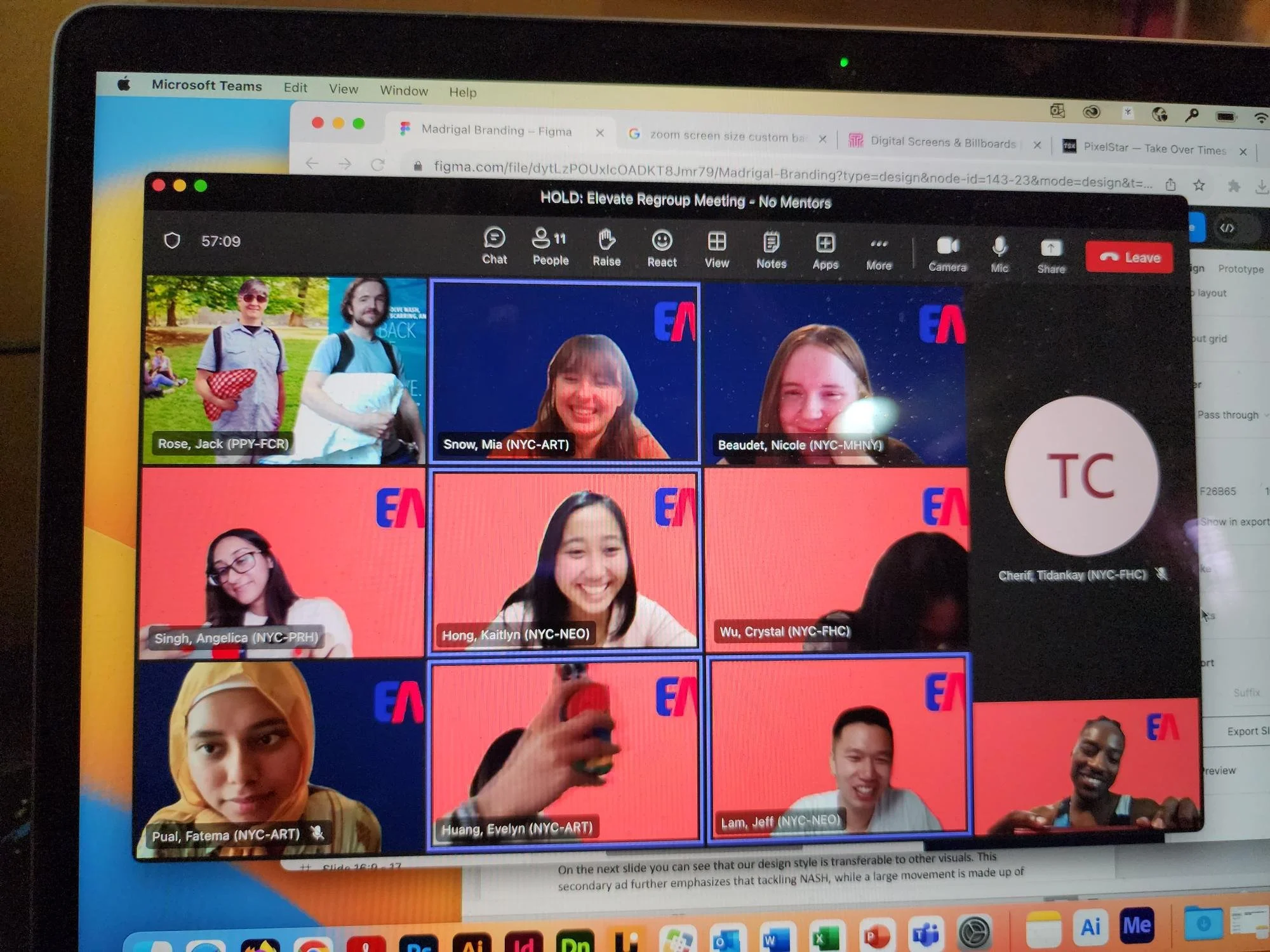
Me cosplaying as an ad mockup to boost team morale during presentation crunch week.
However, as we approached the midpoint of the internship, my team was feeling about as overwhelmed as our patients were.
During review, the client wasn’t particularly fond of any of our ideas thus far. The feedback was brutal.
Some of our ideas had potential as standalone tactics, but none had the “oomph” to become the backbone for an entire DTC social media campaign.
With only a few weeks remaining, we needed to think bigger, dig deeper—and fast.
It wasn’t until I started watching the patient interviews given to us by our client that I hatched the idea which became the basis for our campaign.
In one particular interview, someone from our client’s marketing team was speaking with a NAFLD/NASH patient named Kimberly. The marketing person showed Kimberly an assortment of about twenty different images to be repurposed for print ads.
“Which of these do you like the most?”
Kimberly examined the images for a moment, and then selected the one of a jogger in athletic attire sitting atop a concrete barrier by the waterfront at dawn.
“This one,” she said. “It’s peaceful. He’s up early in the morning getting his exercise in. He’s being healthy because that’s what he’s supposed to do. Because he’s a good person.”
That last line was a gut punch.
I’d read plenty of patient comments online, but it made a world of difference seeing the exhaustion on Kimberly’s face—hearing that twinge of shame in her voice.
Here was someone who felt morally culpable for her condition. When I heard, “Because he’s a good person,” what was subcommunicated was, “I have this disease and I’m wrong for having it.”
Maybe even, “I deserve to have it.”
I would never know what experiences, beliefs, and habits cummulatively led Kimberly to this place in her disease state.
But what I did know is that she wasn’t alone. 25% of the whole country shared in her plight.
In order to restore their livers—and their lives—these patients would need solidarity and support.
It would take a full-blown movement…
A NASH-ional Movement
Our goal with “Nation Against NASH” was to generate cultural awareness for NAFLD/NASH—a slient killer, and the #2 leading cause of liver transplants in the United States—as well as generate demand for Product X.
In addition to traditional print/digital tactics, our campaign featured several interactive billboard displays across the country.
When posting using the tag #NationAgainstNASH, photos would be uploaded to the billboard in real time, contributing to the collaborative restoration of a “scarred” mural.
We pitched this idea to our client and the IPG Health C-suite at the end of our internship, winning first prize for our category.
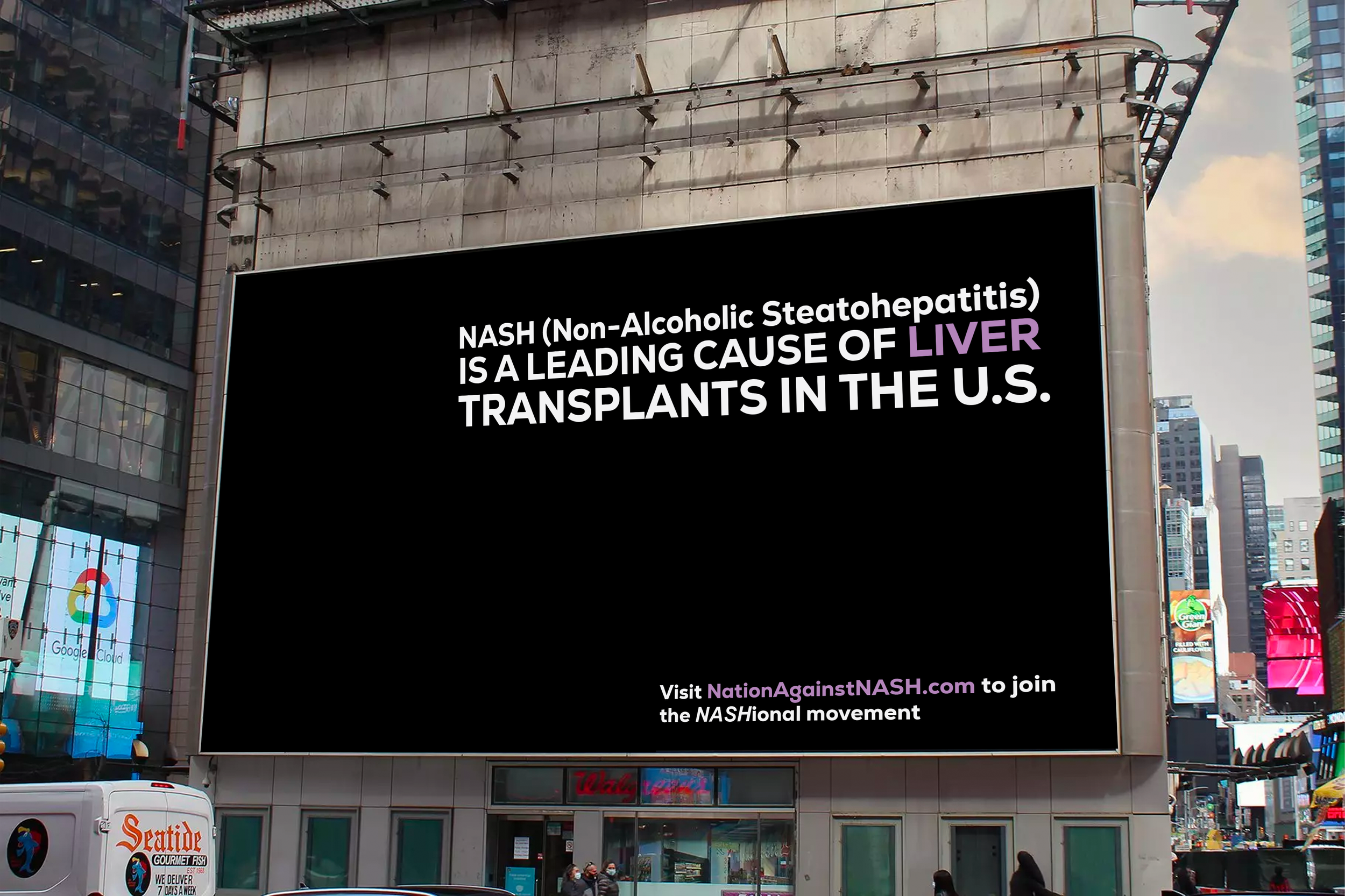
Here is a mockup of our digital billboard in Times Square. The headline copy alternates between three different messages.
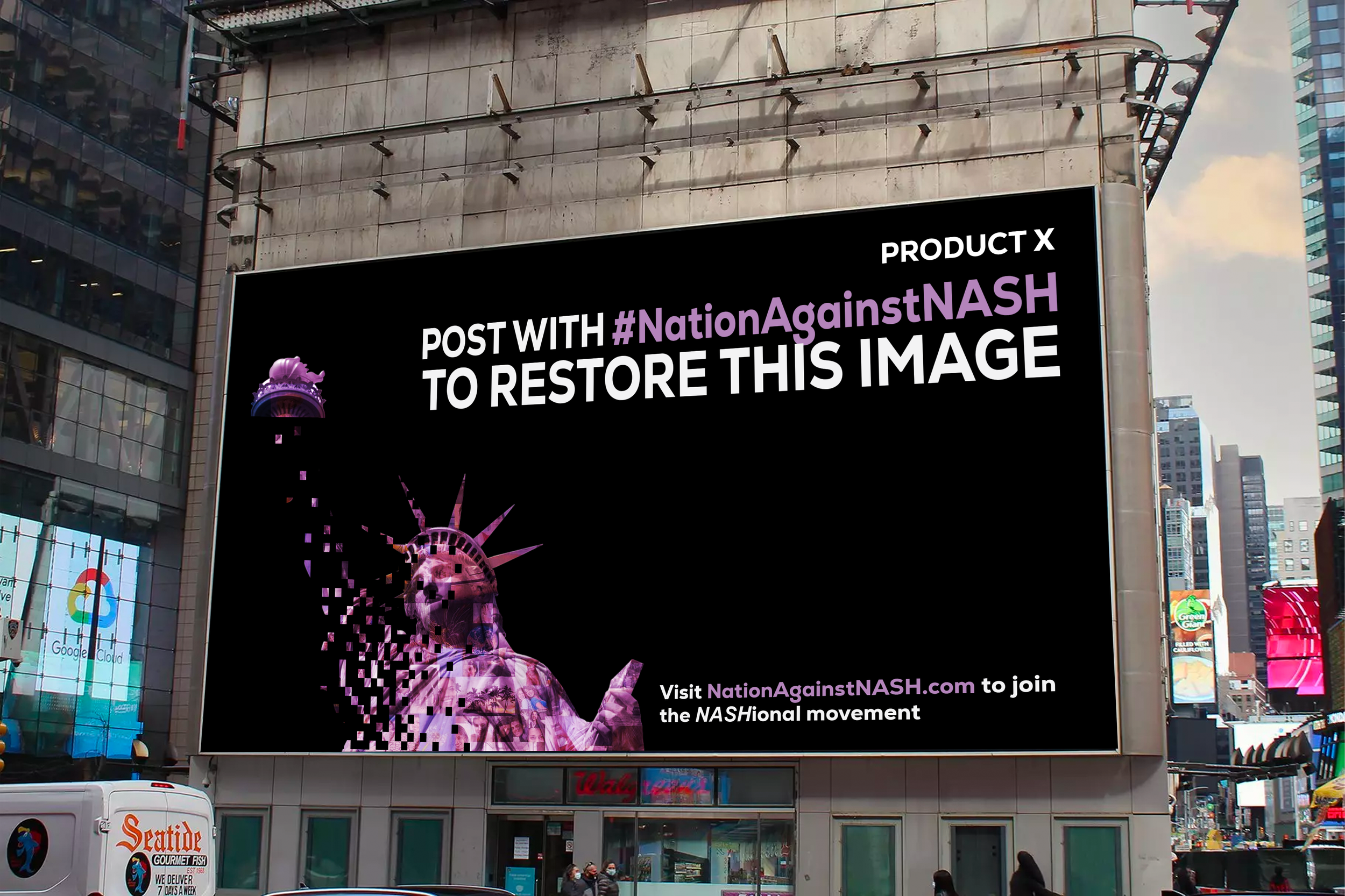
As people post images using the tag #NationAgainstNASH, those images contribute to the restoration of an interactive mural. It's a visual metaphor for the restorative effects of Product X on liver scarring.
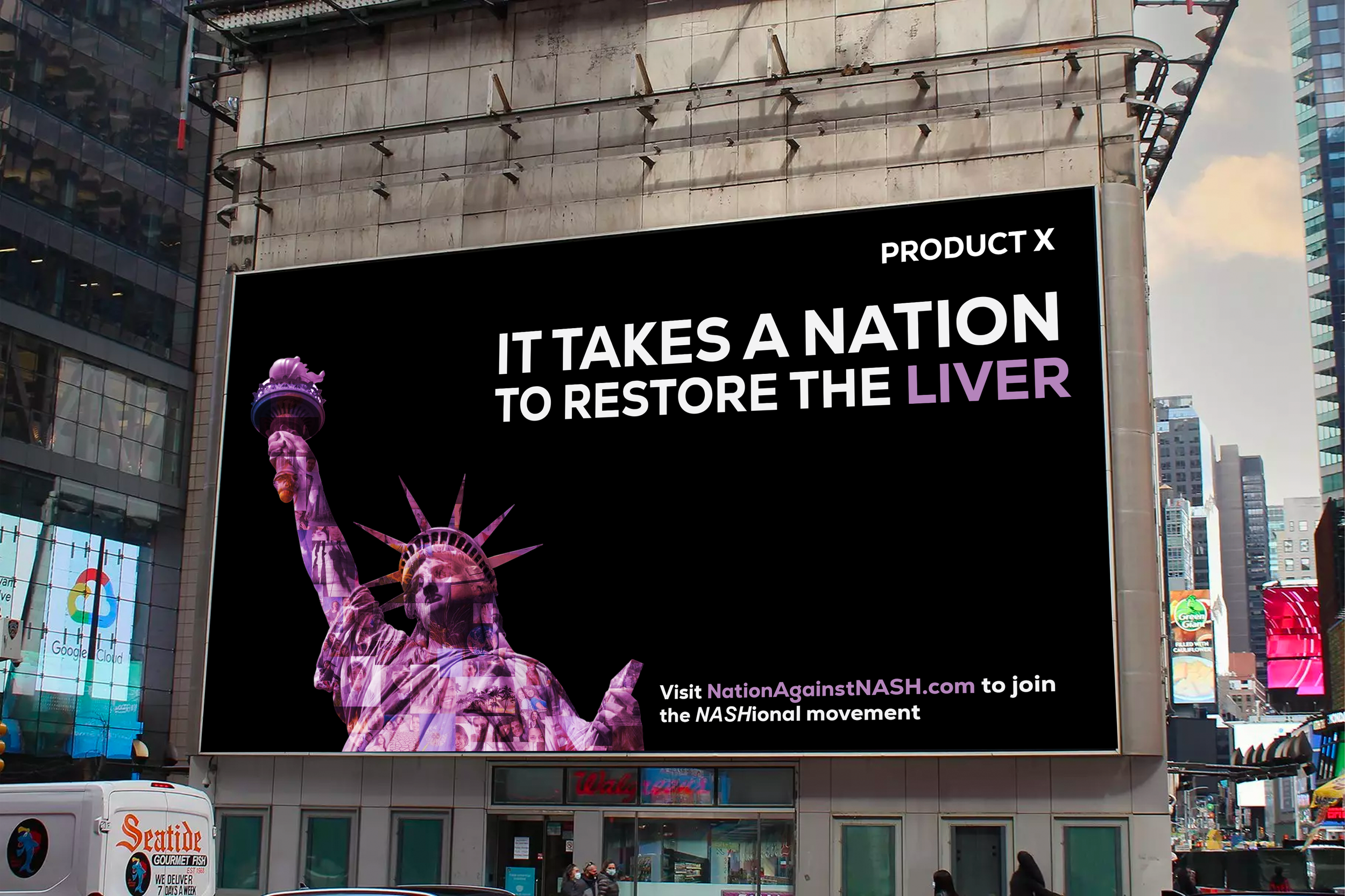
Once a certain threshold of posts has been reached, the mural is completed!
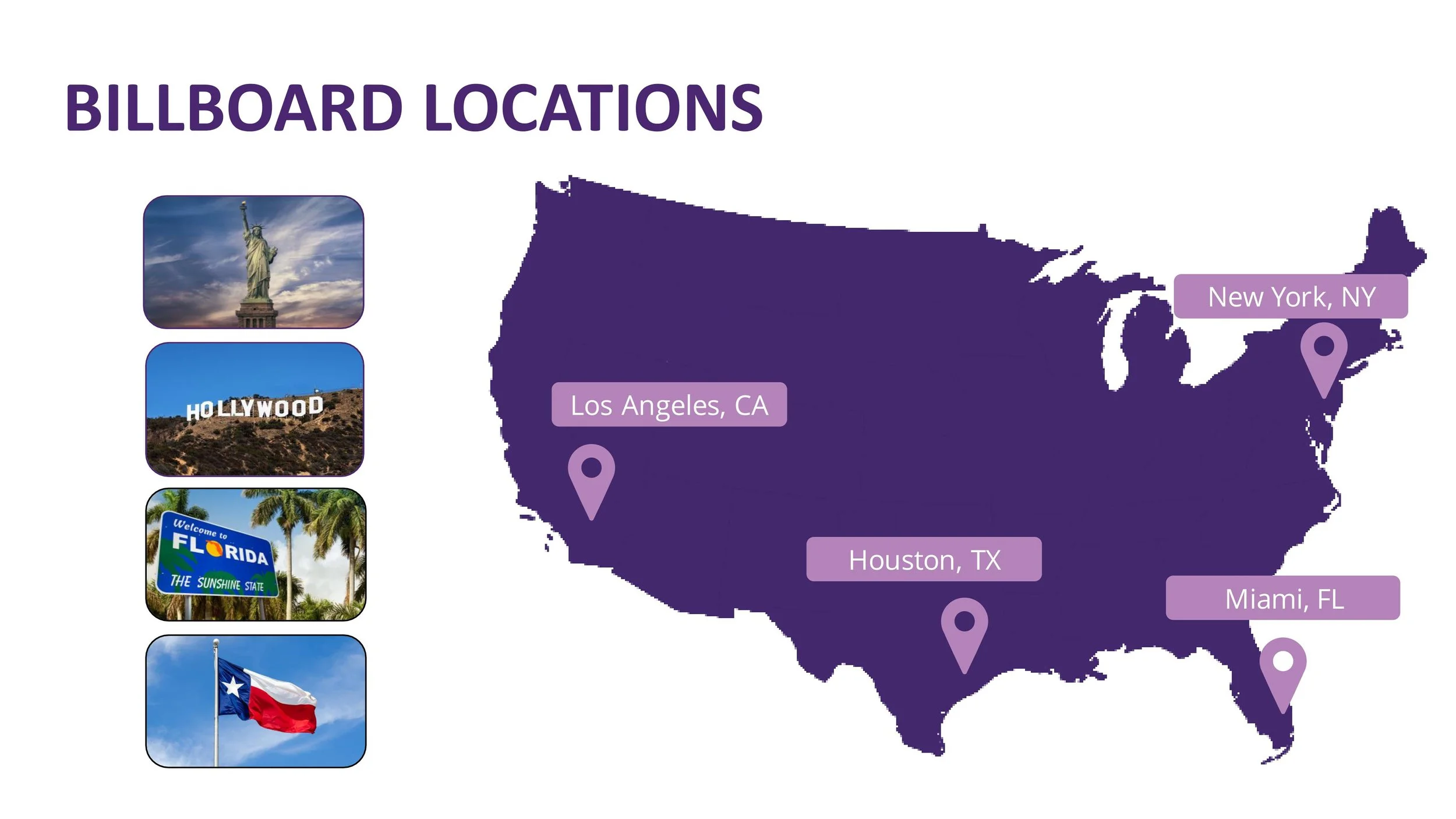
These displays would be installed in four major cities across the United States. Each display features a unique mural of a famous landmark from its respective city.

The placement of these billboards was based on thorough demographical research.
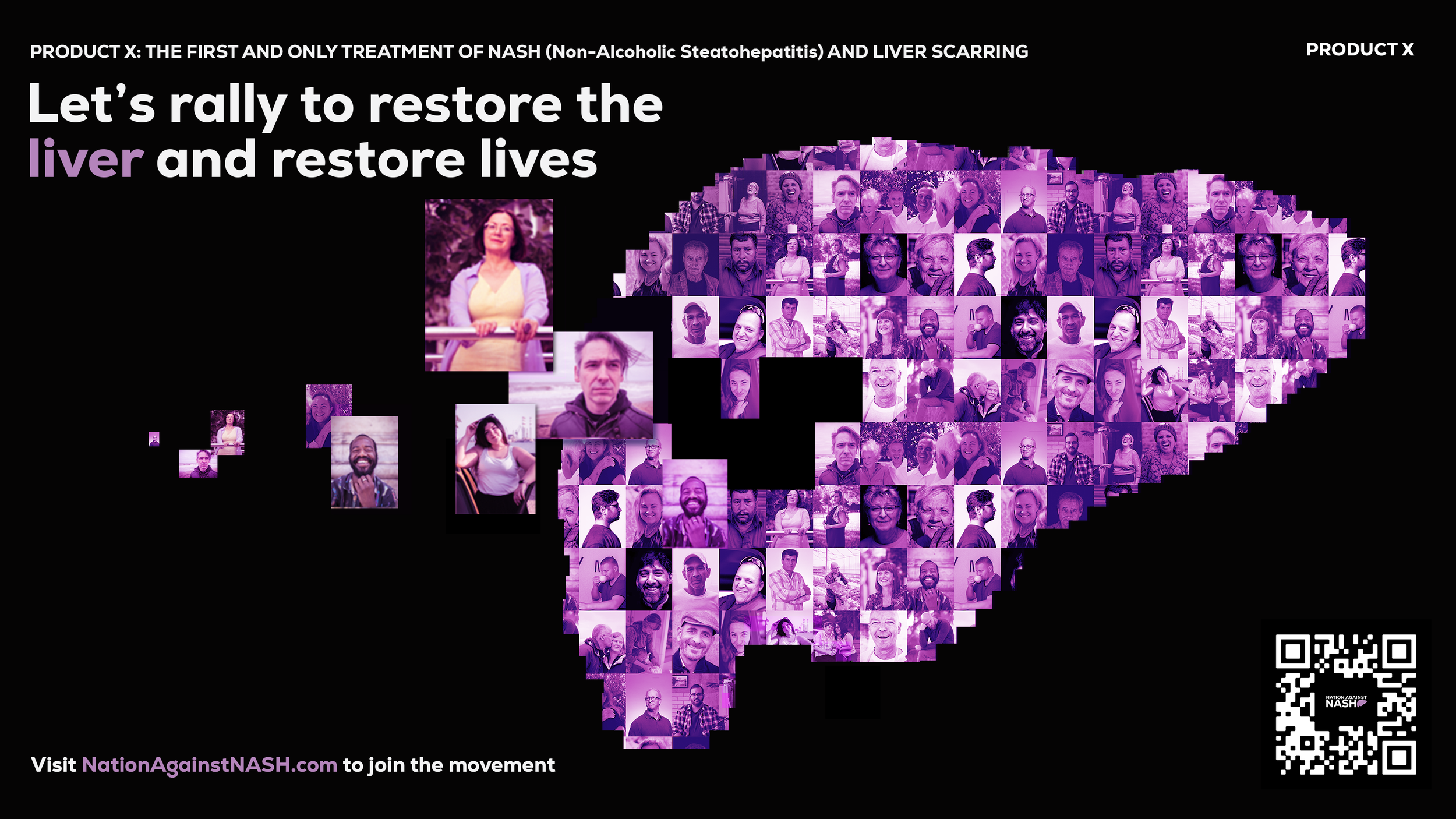
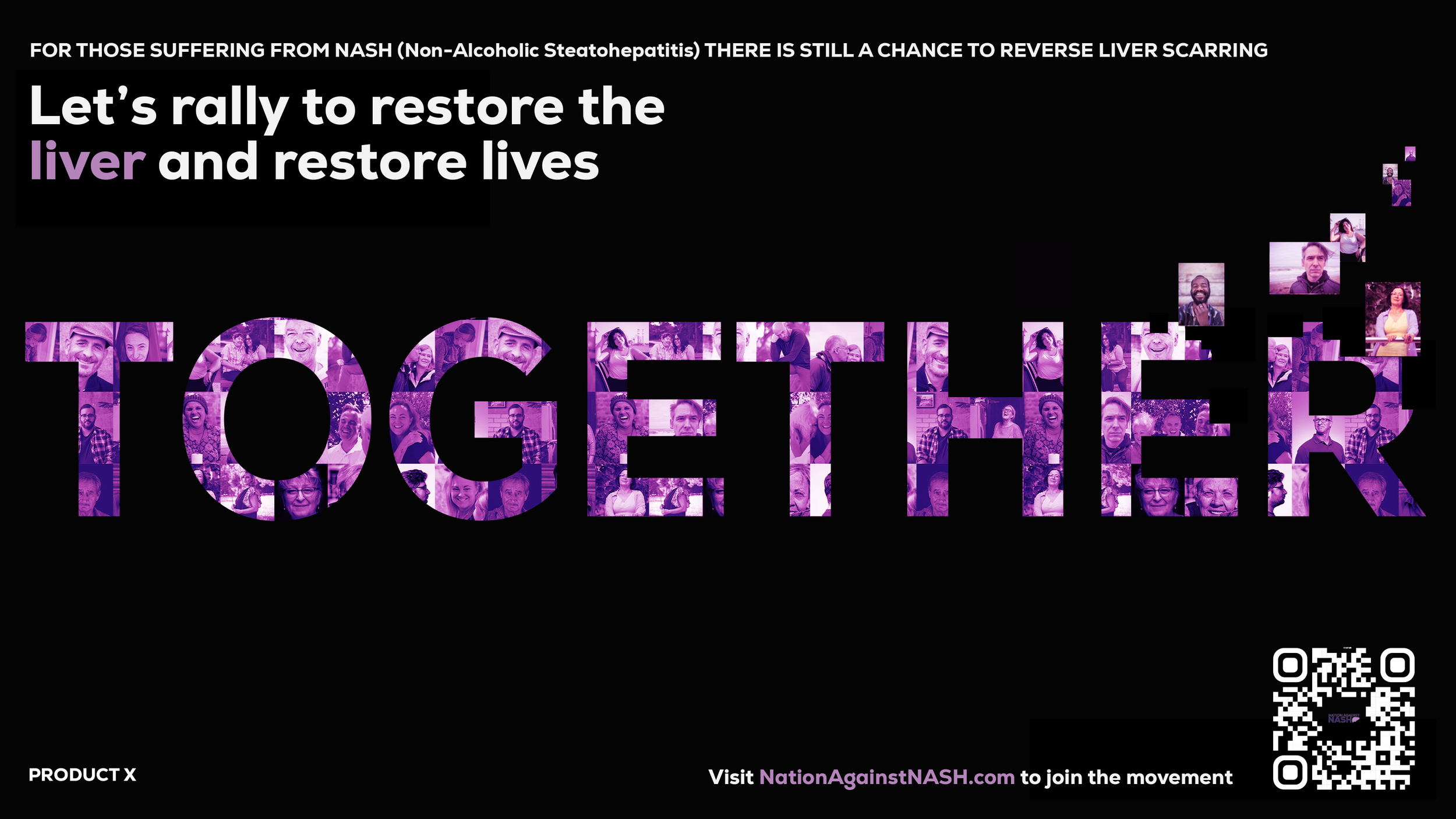
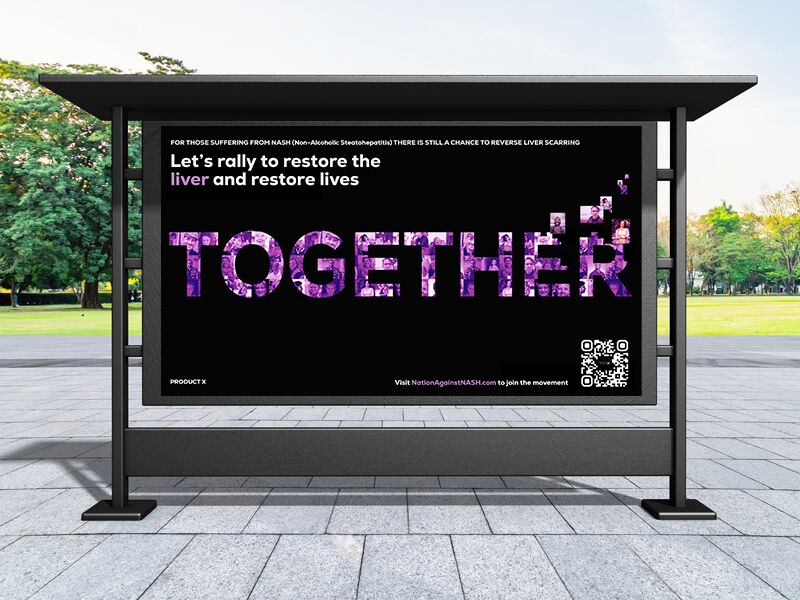
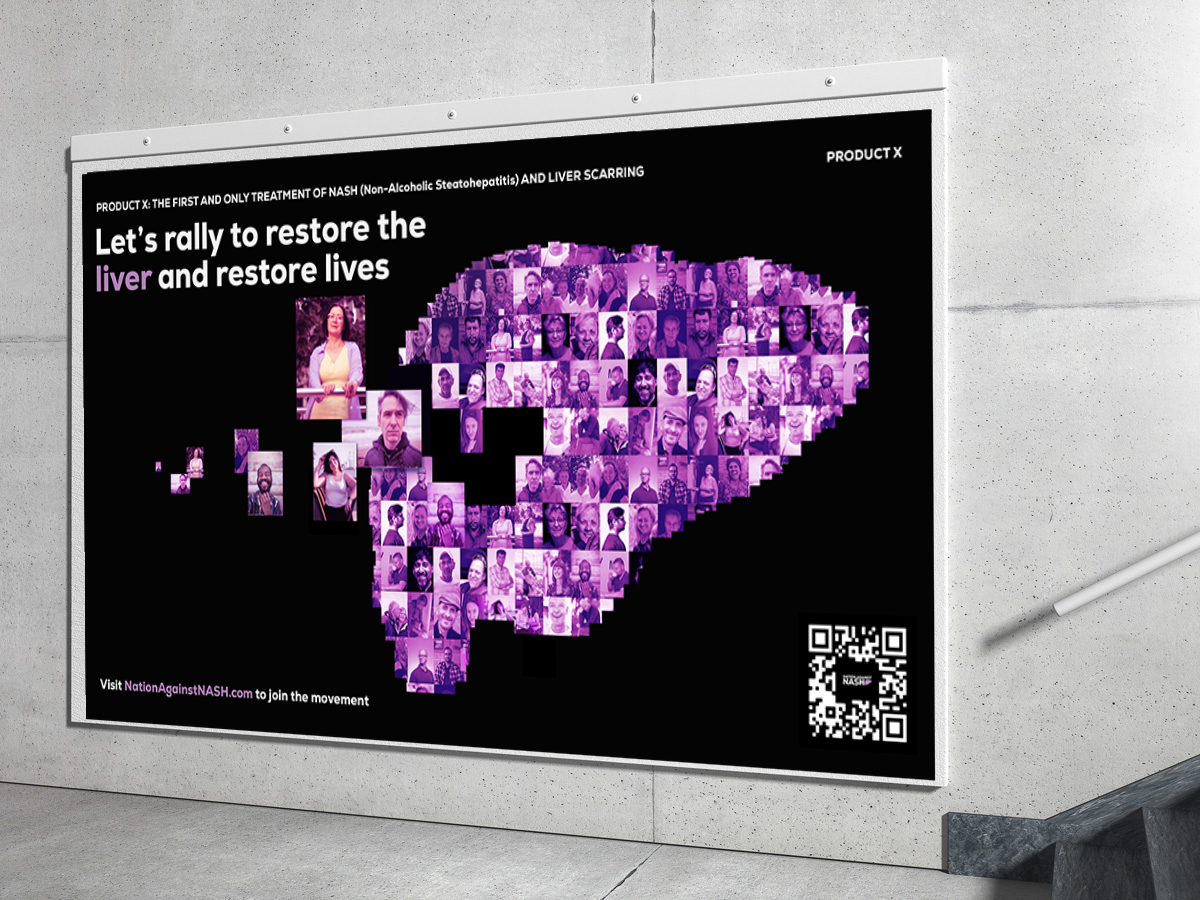
Mockups of static banners to be displayed in subway terminals and on bus stops.

An mockup of a sponsored Facebook ad.
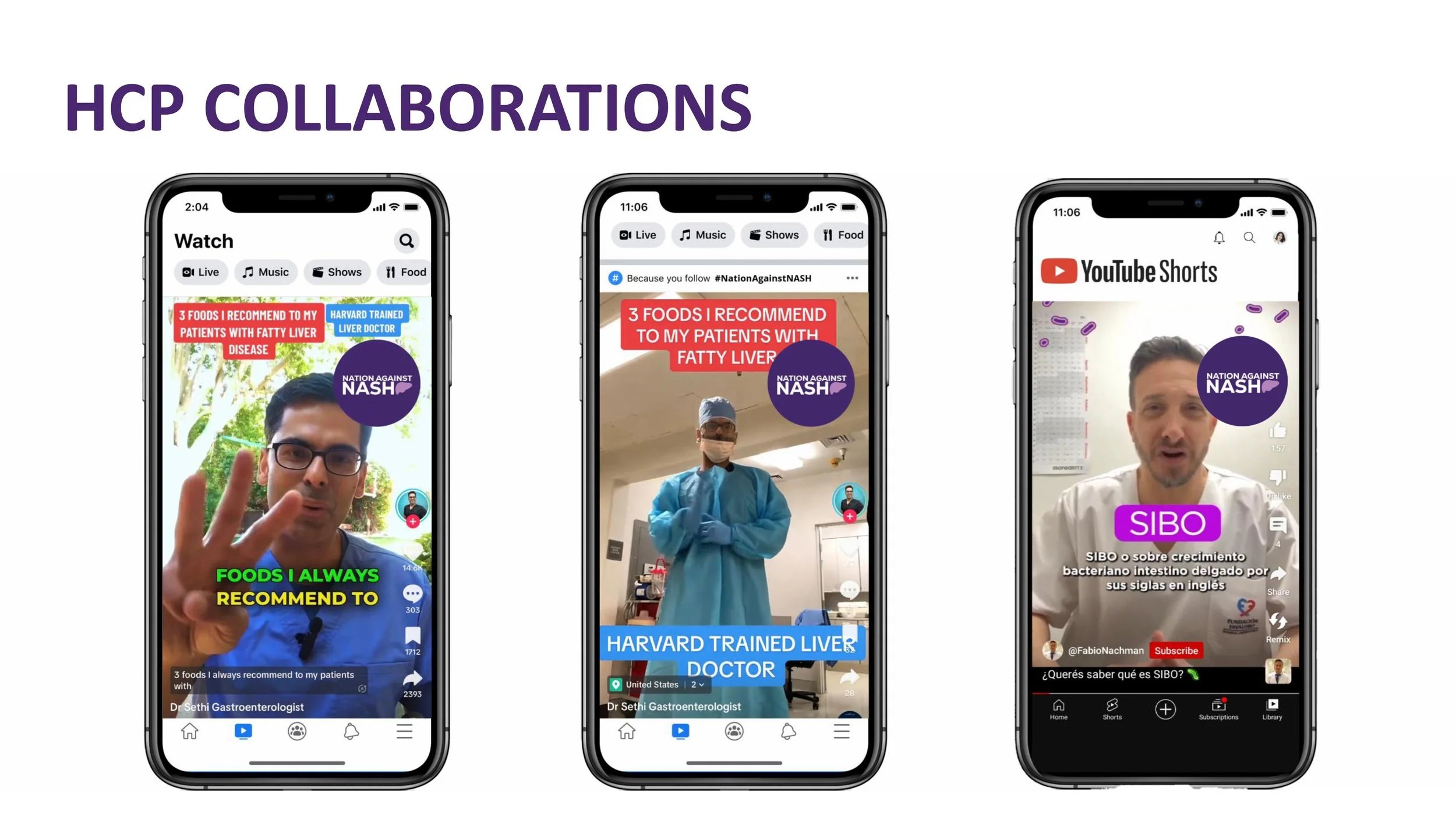
One element of our social media strategy was collaboration with healthcare influencers.

Mia, Evelyn (our UX designer), and I created a patient-facing website.
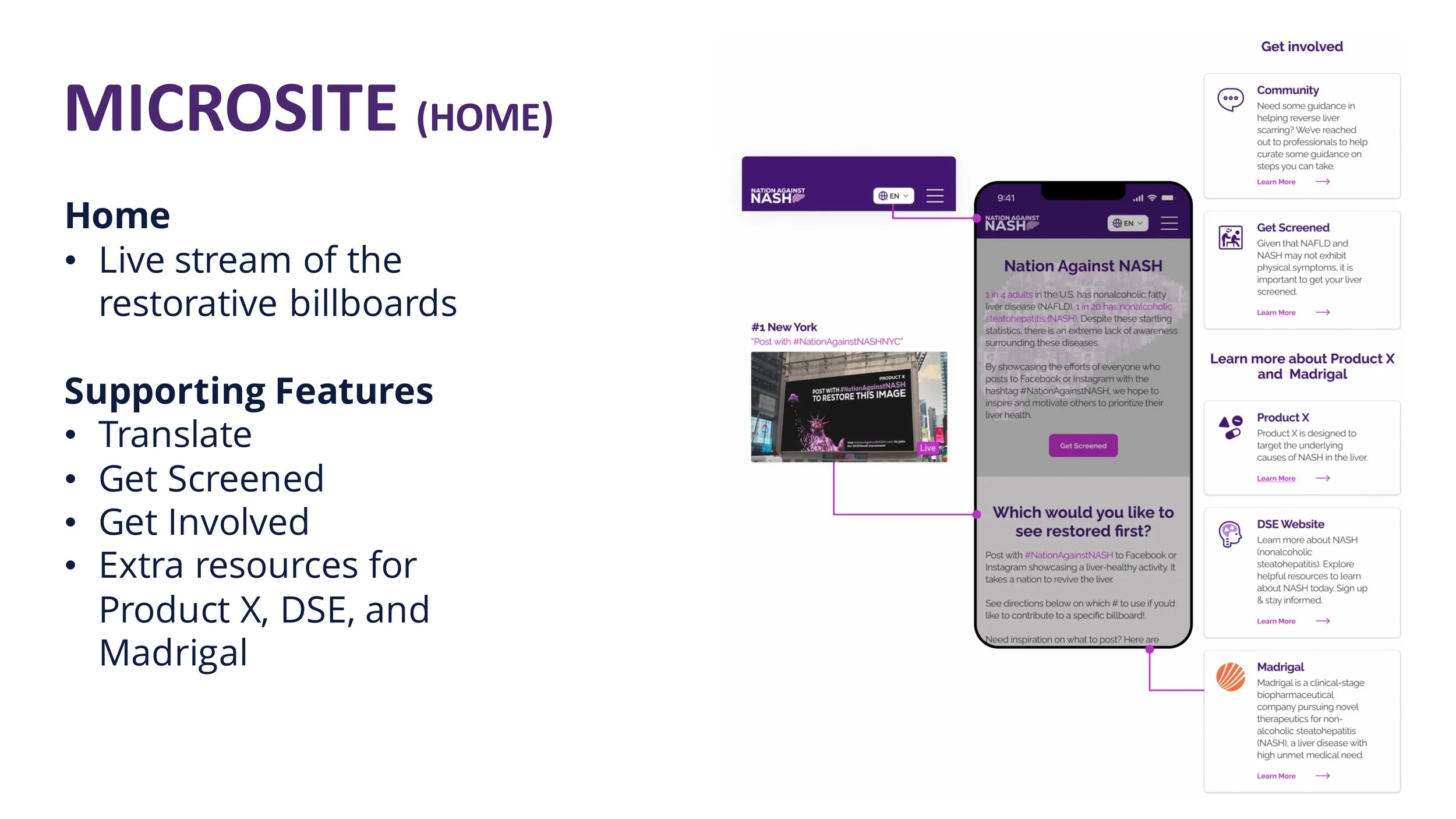
The website included a host of features: a community page, directions for getting screened, links to information about NAFLD/NASH and Product X, and more.
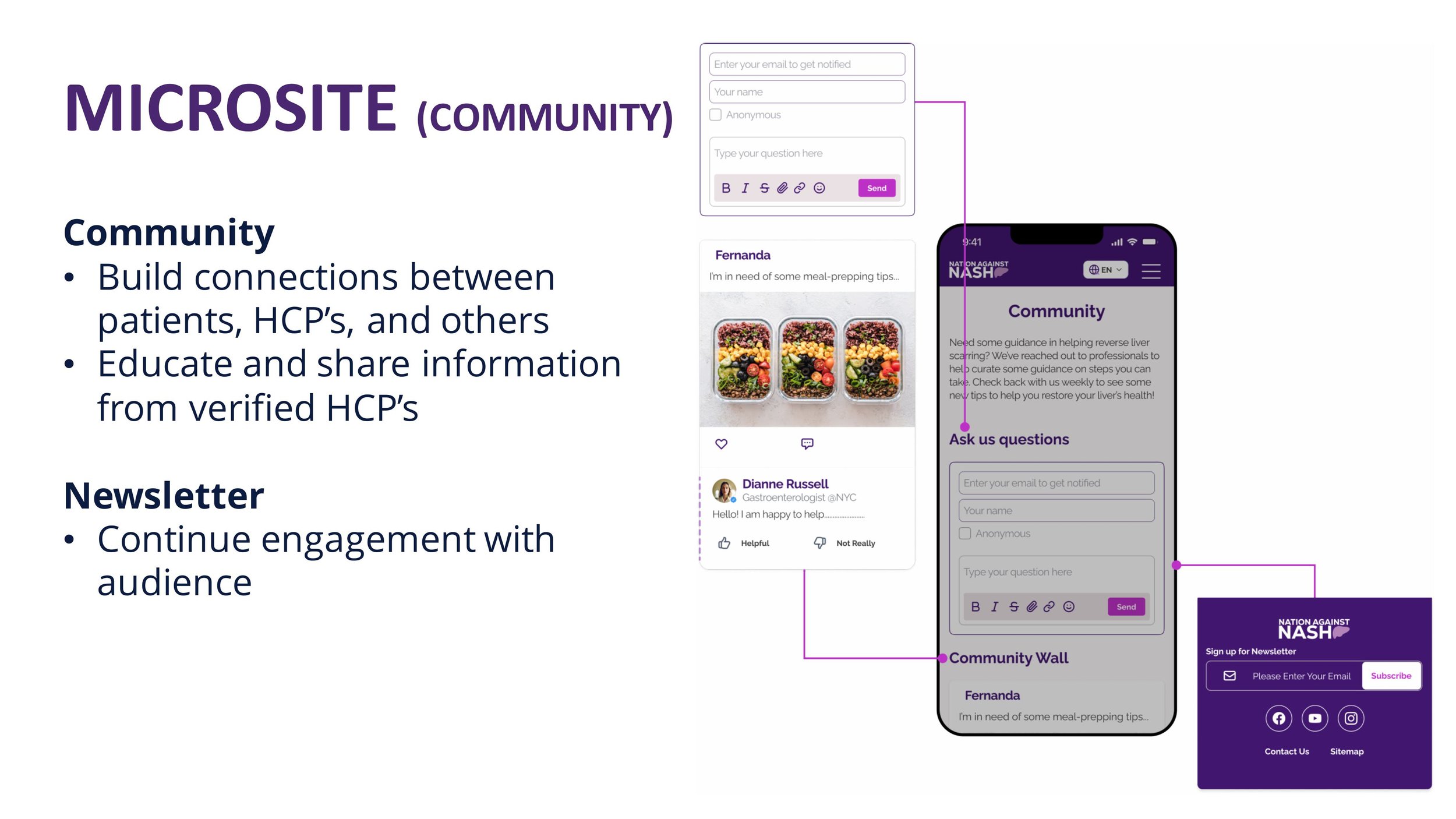
On the community page, patients are able to connect with each other and with verified heathcare professionals. They can share recipes, lifestyle tips, effective treatment strategies, or emotional support!
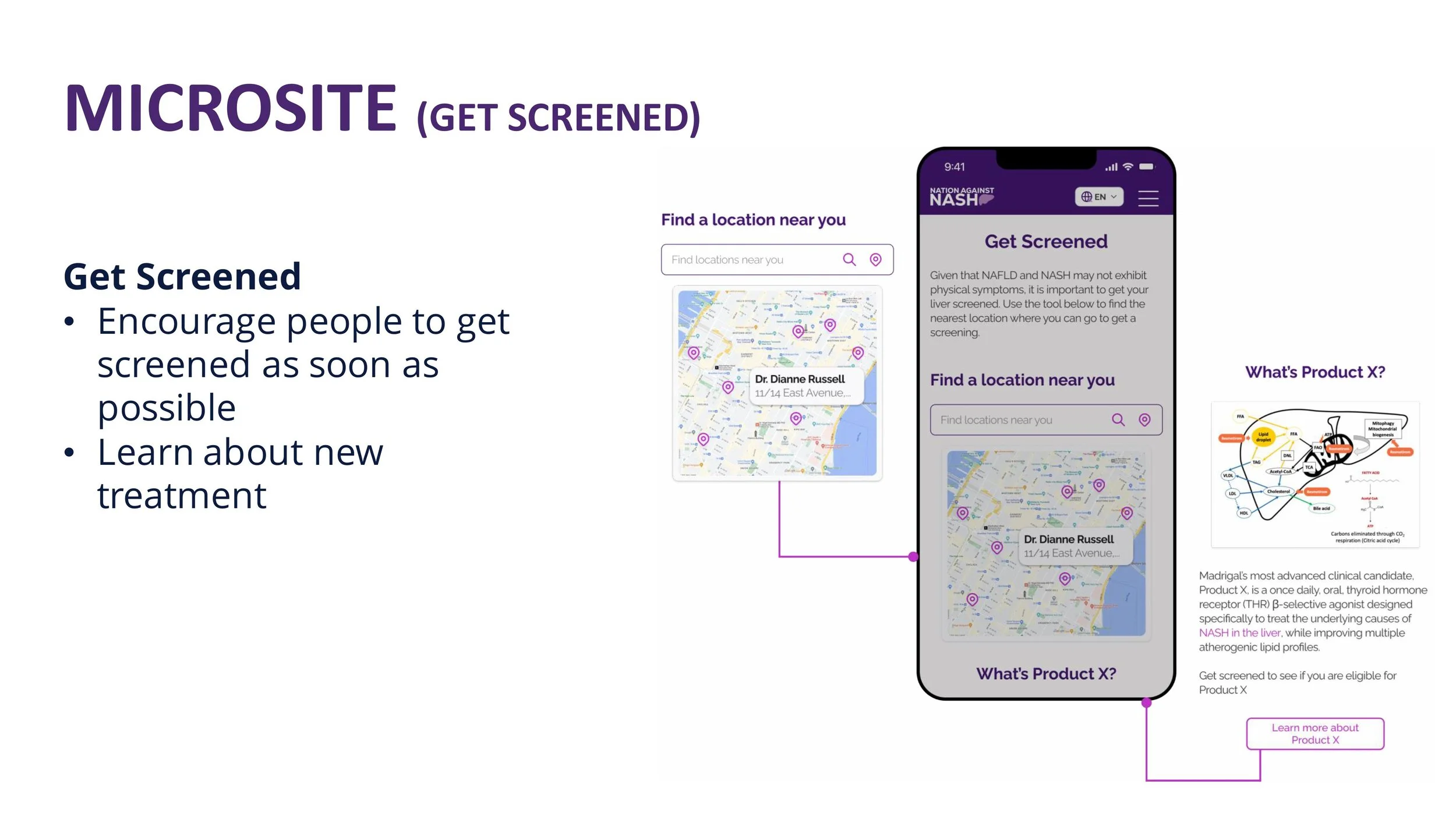
The "Get Screened" page directs patients towards the nearest clinics where they can...well...get screened.
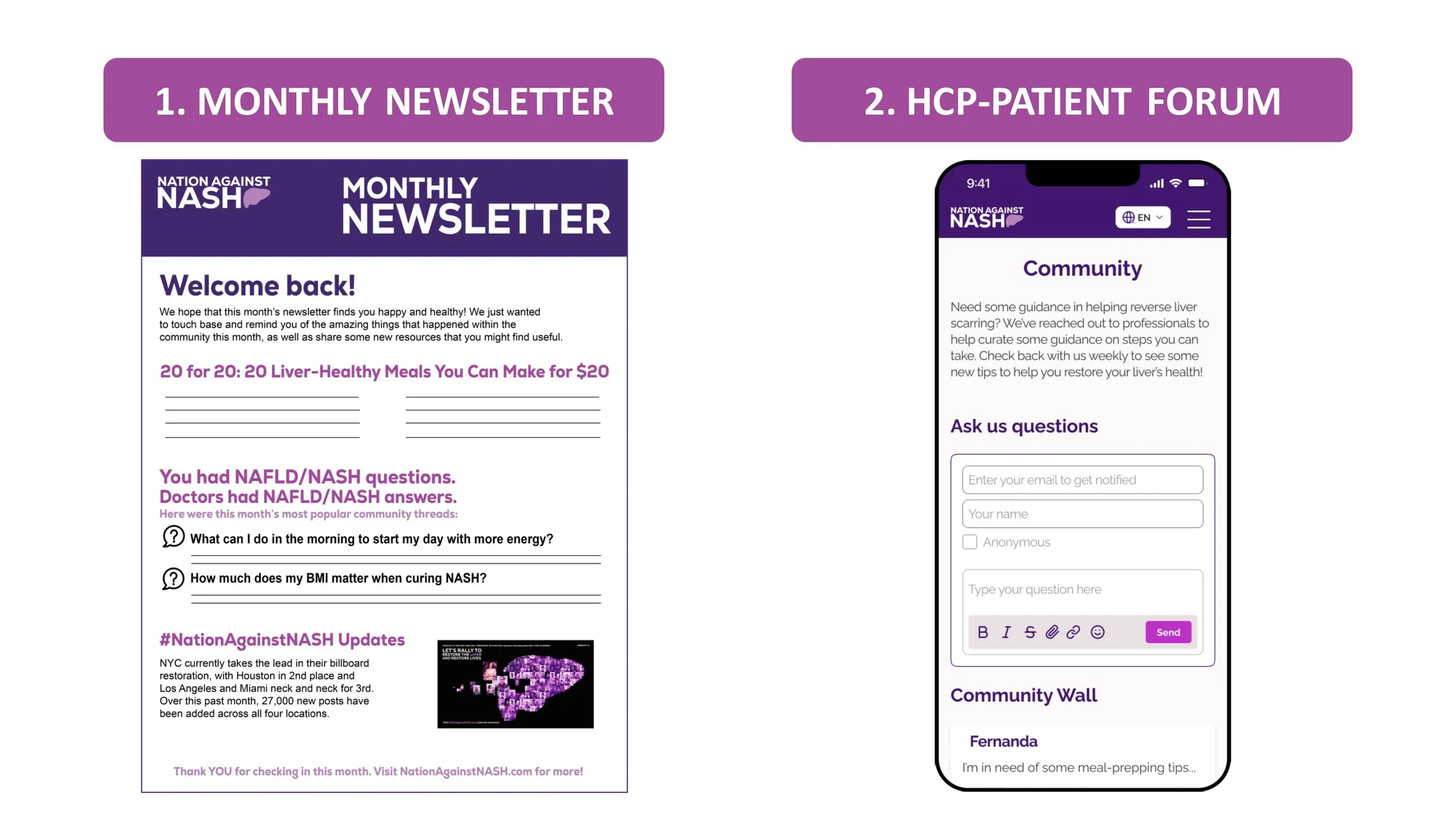
Those who signed up for our email list would receive a monthly newsletter jam-packed with valuable treatment tips and FAQs answered by doctors.