I Rejected My Dad
Here's why it was bad for my emotional health.
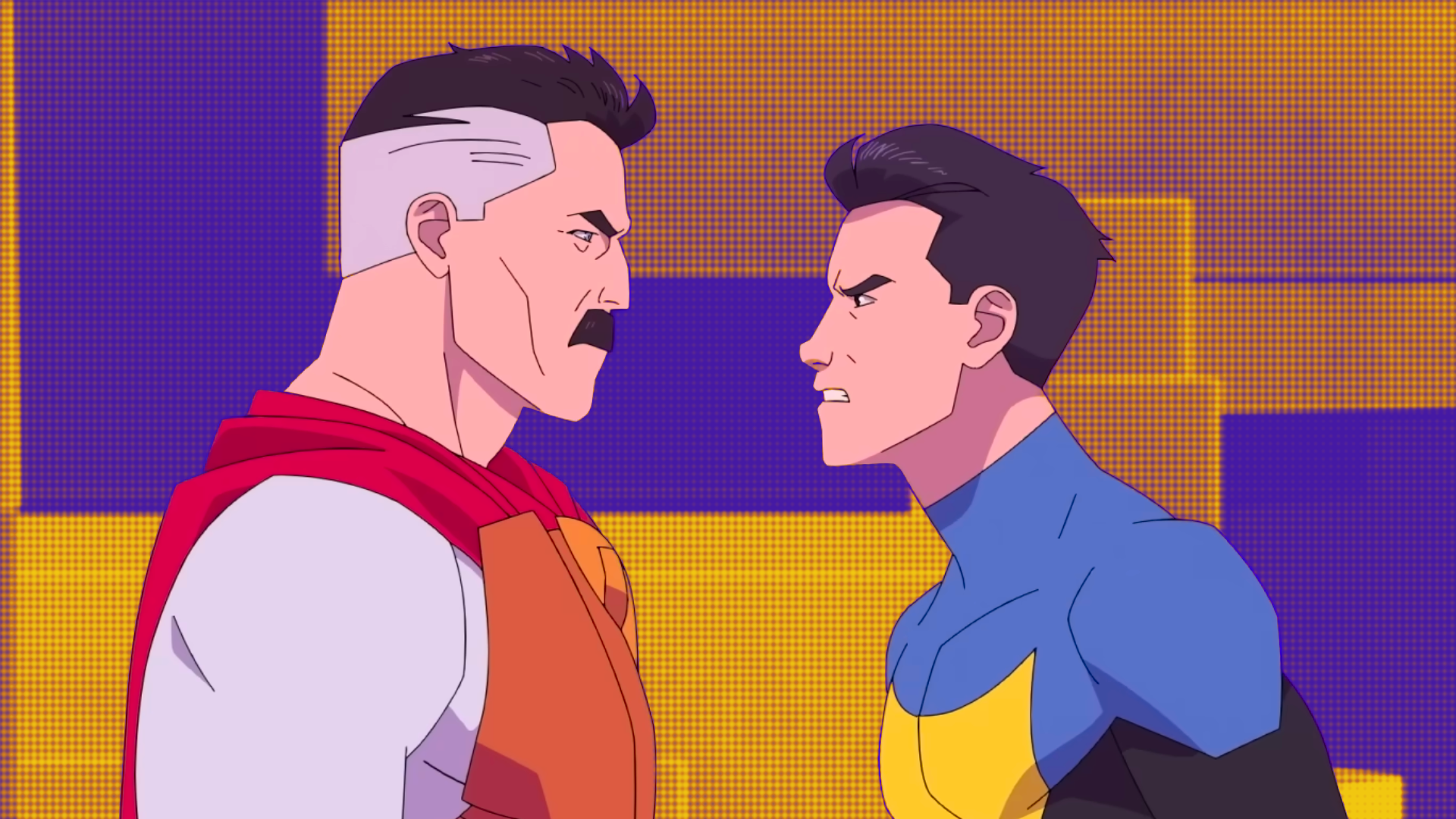
Photo: Invincible. Mark Grayson confronts the galaxy’s greatest dad.
“I won’t end up like Dad.”
I made this promise to myself after Dad’s alcoholism hurt my family and led to his untimely demise.
I swore never to make the same mistakes. I swore to be the one who would end the cycle of addiction in my family so we’d never need to worry about it again.
However, my rejection of my similarities with Dad caused me to stumble. A lot.
I did plenty of things wrong in an attempt to find my footing, until I ultimately found a successful path to healing and lasting emotional stability.
I want to help you find some stability too. If this situation resonates, please continue reading.
To reject my similarities to Dad, I had to identify them first.
Growing up, I believed Dad was perfect. He was the type of guy most people liked and wanted to be like. He was caring, intelligent, and professionally successful. His presence brightened a room, and he commanded attention with sincerity and humor.
But when I saw his life undone by alcohol firsthand, it reframed things in an unsettling way.
I saw a raw, human side of Dad I hadn’t seen before. I started to understand the consequences of the traits I emulated from him.
For example, Dad was a nervous person sometimes. The man had back-up plans for his back-up plans. This was often written on his pensive face.
But, until I saw Dad succumb to addiction and resort to denial, it hadn’t occurred to me that maybe the reason why he was admired by so many people was because he went to great lengths to ensure it.
Maybe it was because he’d spend so much of his waking energy meticulously planning how he was going to get through the day. He’d try to do so many things and be so many things for others, all while trying to abate the feeling of dread in his belly.
I saw how alcohol enabled Dad to hold onto these behaviors in a way that real vulnerability couldn’t. It soothed his anxiety and offered him an illusion of control. But by the time the losses in his life were mounting, his behaviors and addiction were impossibly strong to break on his own—no matter how fervently he tried or wanted to.
And I solemnly believe he did want to.
In the months I spent trying and failing to free him, I found the true and startling source of my distress. It was a passing thought, but it practically screamed at me as it ripped by:
“I’m him. I’m just like Dad.”
I struggle with masking too, I thought. I’ve struggled to be everything for everyone in the past. I struggle to express my uncomfortable emotions—and the dread he feels?
I feel it too. More often than I’d care to admit.
Living with Dad during his decline was like grabbing and shaking a mirror by the shirt collar. It was like scrying into the future of the man I might become if I failed to change my own ways.
Many of the behaviors I modeled and trusted from Dad—the man I wanted to be like all my life—were now proven dysfunctional. Not just dysfunctional, but volatile. I felt like those pieces of him living inside of me could explode at a moment’s notice and send me spiraling, and it was only a matter of when—not if—I’d succumb to an addiction of my own and push away everyone I loved too.
This feeling scared the shit out of me.
It scared me so much to the point I outright rejected it for the first few months after Dad died. Instead, I fixated on betrayal and contempt:
“How dare you dump this on me? Why did I ever insist on being like you? Why should you get to rest while I clean up the mess you made?”
Ironically, my refusal to accept Dad brought me back to the same behaviors I wanted to disown. I became more reclusive. I had a hard time opening up to new friends at my church. It was easier to close up and push them away than to let them into my pain.
It got lonely. I needed to try something else.
In time, I decided I would instead finish the battle Dad couldn’t. I would become the sacrificial son who dedicated my life to ending the generational cycle of addiction in my family.
This would be my way of honoring his memory. After all, I was a lot like him. It had to be me.
But this was also a bad idea. While it was a noble one, I mistakenly became enmeshed with Dad. In other words, I became him emotionally. The exhaustion of holding on to both his struggle and my own struggles was grueling.
I wrote this in a journal at the time:
“It feels like I’m standing in rapids with a spike wall at my back. If I stop moving against the current, it’ll impale me. I’m too stubborn to die, but also too tired to continue. I’m not sure how I’ll continue.”
Both approaches led to suffering and confusion.
How did I find lasting peace?
I used a technique I like to call “acceptance and release.” I learned this idea from It Didn’t Start With You by Mark Wolynn.
Wolynn told me to imagine the person with whom I had an emotional hang-up: Dad. After noticing any new emotions or sensations in my body, I was then told to earnestly tell Dad the things I needed to say, acknowledging any similarities between us and asking permission to release any feelings I felt didn’t belong to me.
I tried this one night while I was laying in bed. I brought the image of Dad to mind. I pictured his friendly brown eyes, salt and pepper goatee, and huge pearly grin.
I was happy to see him. But at the same time, I felt heaviness in my chest and trepidation in my throat.
I started talking to him.
“Hey, Dad. I love you, and I miss you all the time. I’m torn up about what happened to you. Not a day goes by where I don’t think about how things could’ve gone differently, or what I might’ve tried differently to get you the help you needed.
But I’m tired. I’m tired of being depressed. I’m tired of being angry about your absence. I’ve been holding onto this weight for a while now and I don’t want to anymore. I think…”
Right then, something inside of me fell apart. I remembered how tightly I hugged Dad’s urn on the day of his funeral—how badly my heart ached for him to stay. But when I processed the reality of the words I was going to tell him next, the tears wouldn’t stop.
“Dad, I think I’m finally ready to let you go. This was your battle—not mine—and so it should rest with you. I’m asking permission to let you go so I can live my life the way I want to…
I just want to honor you by being your son.”
I looked at him again. For some reason, I was afraid I’d find disappointment on his face after he received my words. Instead, I found only compassion. It was his same face I’d see when I was drained from finishing homework late at night, or when I was nervous about a big performance coming up.
His eyes and smile spoke loudly: “Don’t worry about it, buddy. It’s okay.”
That night, the heaviness lifted from my chest, and I regained a valuable perspective.
“I’m not Dad. I’m just me.”
Yes, Dad is one half of the pair who made me. Yes, pieces of him persist through me. And yes, some of those pieces frighten or upset me sometimes.
But I’m not him. I’m me. I’m Jack Rose.
My fixation on Dad’s death and addiction strangled the expression of his memory and my ability to enjoy life in the present. It was my way of trying to keep him here with us, but I found it was trapping me more.
It made it hard to acknowledge how many of my best pieces come from Dad too—pieces I can find pride and joy in. It made it hard to cherish the beautiful memories we shared, and to make new memories of my own.
It was only by accepting the fullness of Dad’s imperfect love that I could live freely as my own person again.
It doesn’t mean I’m always happy with Dad or the choices he made at the end of his life. It doesn’t mean I’m always confident when facing the difficult situations his death saddled us with.
But it does mean I can make better choices for myself with a greater degree of clarity and emotional freedom.
From now on, I’ll let my mistakes simply be my mistakes—not a resentful continuation of the battle Dad tragically lost, or more dreadful proof I’m spiraling down the same path as him.
I recommend you do the same.
Be brave, my friend.
Until next time.